Climate & Earth Systems
57 articles

Earth as Organism: The Science Behind Lovelock's Gaia Hypothesis
James Lovelock's once-heretical idea that life actively regulates planetary conditions has matured from metaphor into a testable framework with profound implications for Earth system science.
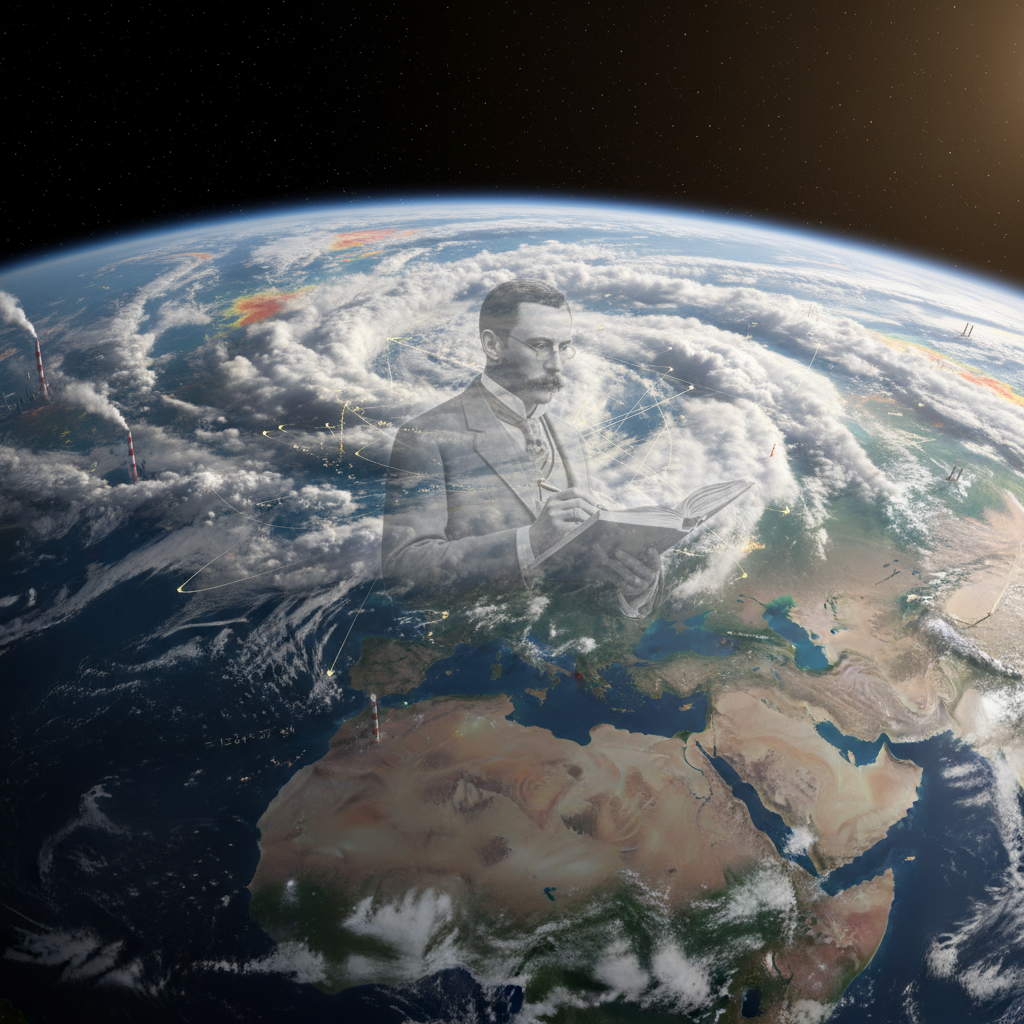
Svante Arrhenius and the First Calculation of Greenhouse Warming
In 1896, a Swedish chemist turned invisible infrared absorption into a quantitative forecast of a warmer planet.

The Planet as a Particle Detector: Using Earth's Magnetic Field to Hunt for Dark Matter
By repurposing the Earth's atmosphere and geomagnetic field as a planetary-scale transducer, physicists are setting unprecedented limits on ultralight dark matter.

The Narrower Deluge: A Proposal for How Warming May Intensify Atmospheric-River Extremes
A warmer atmosphere may not simply make atmospheric rivers wetter—it may concentrate their rainfall into shorter, more destructive bursts.
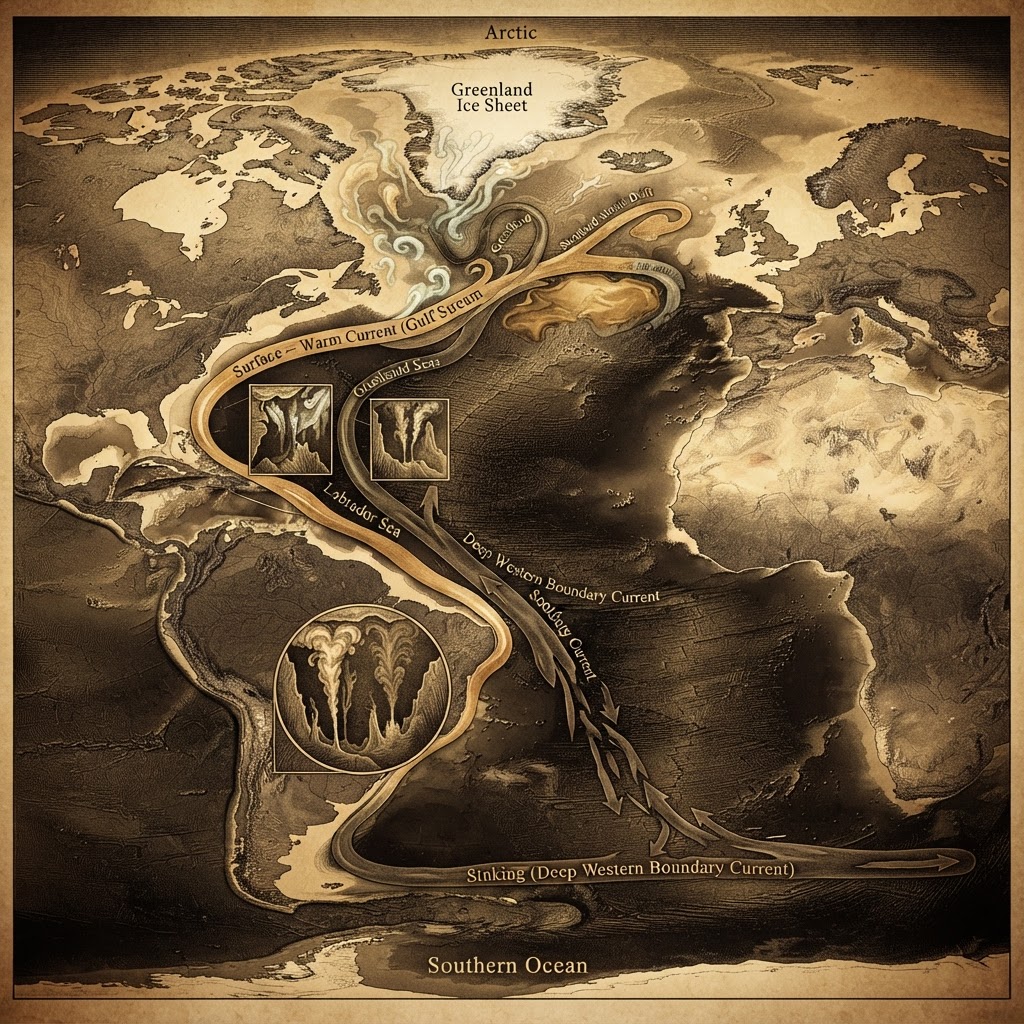
The Atlantic’s Great Conveyor: New Evidence of a Climate Tipping Point
The ocean circulation that carries heat northward has weakened, and scientists are still debating how close it may be to an abrupt transformation.

Modeling Solar Geoengineering’s Regional Climate Trade-Offs
New generations of climate models show that stratospheric aerosol injection could cool a warming planet unevenly—reducing some risks while reshaping rainfall, circulation, and regional extremes.

The Wisconsin Forest That Breathed Different Air for 11 Years: What Aspen-FACE Revealed About CO₂, Ozone, and the Future of Forests
For over a decade, scientists rebuilt the atmosphere around a young northern forest — and discovered that the same gas warming the planet can feed its trees, while the pollutant burning our skies can quietly starve them.

Atlantic overturning circulation shows warning signs of a near tipping point
Multiple observational fingerprints and new detection methods suggest the AMOC may be closer to a critical collapse than previously assessed—though exact timing remains uncertain.

Cloud microphysics emerge as the main source of climate‑sensitivity spread
Recent model intercomparisons and high‑resolution simulations point to how tiny drops and ice crystals — and how we represent them — widen the range of projected warming.

Local Coherence: Why Micro-Generation Becomes the Stable Attractor in Power Systems
A coherence-as-optima framing shows distributed micro-generation — not grid abandonment — is the system's natural stable attractor under decarbonization, intermittency, and resilience pressures.

Microgrids Keep the Lights On Through Storms: Field Data Show Self‑Healing Local Power Dramatically Improves Resilience
New field datasets from post-storm deployments demonstrate that islanding microgrids and coordinated distributed generation maintain critical services with far higher availability and faster restoration than centralized systems.

The Ozone Hole: From a Cold-Case Discovery to a Policy Success — and Why the Job Isn’t Done
Three decades after the Antarctic ozone hole shocked scientists, coordinated policy has set recovery in motion — but climate change and rogue emissions keep the future conditional.